- By Charlotte Brown
- October 21, 2026
The best holiday chestnut recipes go well past roasted chestnuts. A classic Mont Blanc, marrons glacés, a chestnut Bûche de Noël, a chestnut cream crepe or pastry filling, and a savory chestnut soup or stuffing cover both the pastry station and the hot line.
Below, we break down which Nutley Farms chestnut product fits each dish, how to work with it, and where it earns its spot on a holiday menu.
Key Takeaways:
- Five main chestnut dishes cover holiday menus: Mont Blanc, marrons glacés, Bûche de Noël, sweet fillings, and savory soup or stuffing.
- The Nutley Farms chestnut line covers all five dishes, and chestnut percentage and sweetness decide which product fits each job.
- Candied chestnut pieces taste the same as whole ones and are typically lower in cost per pound.
Which Chestnut Product Fits Which Dish?
Each product in the Nutley Farms chestnut line is built for a different job, and the two numbers that matter most are chestnut percentage and sugar. Higher chestnut content means more body and a deeper nut flavor. Lower content means a smoother, sweeter product that spreads or folds easily. Here's how the line breaks down:
Nutley Farms Chestnut Line |
|||
|---|---|---|---|
|
Product |
Composition |
Texture |
Best For |
|
73% chestnut, sugar, vanilla |
Firm, pipeable paste |
Mont Blanc vermicelli |
|
|
60% chestnut, sugar, vanilla |
Dense paste |
Mont Blanc, buttercream, mousse, ice cream |
|
|
50% chestnut, sugar, vanilla |
Smooth cream |
Crepes, pastry fillings, brunch |
|
|
85% chestnut, 15% water |
Thick, unsweetened puree |
Soup, stuffing, game accompaniments |
|
|
Whole chestnuts in vanilla syrup |
Tender, glossy |
Marrons glacés, showpiece garnish |
|
|
Chestnut pieces in vanilla syrup |
Tender, broken pieces |
Inclusions, plated garnish |
|
Definition: Crème de marrons is the French name for sweetened chestnut cream, a smooth blend of chestnut, sugar, and vanilla. It dates back to 1885 in France's Ardèche region, where it was first made from candied chestnuts that broke during production.
Chestnuts are a holiday ingredient by reputation, and the market data backs that up. In 2025, IMARC Group's United States Chestnut Market report valued the US chestnut market at $20.2 million and noted that demand peaks during the holidays, when chestnuts are a traditional part of festive meals. Purees and pastes are among the value-added formats the report highlights.
Here's how each chestnut product works on a holiday menu.
1. How Do You Make a Classic Mont Blanc With Chestnut Paste?
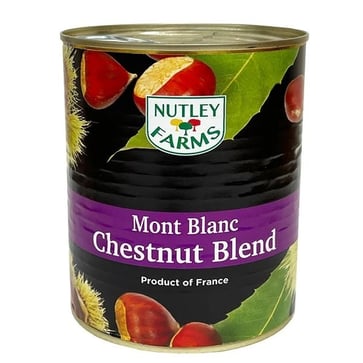
A classic Mont Blanc is sweetened chestnut paste piped into thin strands over a meringue base and whipped cream, shaped to look like a snow-capped mountain. Nutley Farms Mont Blanc Chestnut Blend, also known as Chestnut Supreme, is perfect for this. At 73% chestnut, it holds a clean strand straight from the can through a vermicelli or multi-hole tip.
A few ways to adapt it for service:
- Plated: Build on a crisp meringue disc with a chantilly dome, then pipe the chestnut over it à la minute so the strands stay defined.
- Banquet: Swap the meringue for a sablé tart shell. It holds up better in a reach-in and plates faster at volume.
- Softer version: Use Sweetened Chestnut Paste 60% loosened with a little cream or dark rum for a softer, more aromatic strand.
Our Take: Mont Blanc is one of the easiest ways to add a recognizably French holiday dessert without teaching the line a new technique. If your team can pipe, they can make it.
2. How Do You Serve Marrons Glacés on a Holiday Menu?
Marrons glacés are whole chestnuts candied slowly in syrup until they're tender, sweet, and glossy. They're one of the classic French holiday confections, and few kitchens make them in-house. Production can be a multi-day process with many hand steps from harvest to finished product, and many of them are still done by hand.
Nutley Farms Whole Candied Chestnuts in Syrup skip all of that. Drain them, glaze or roll them in sugar, and serve as mignardises, on a petit four plate, or in a holiday gift box. They also work as a showpiece garnish on a Mont Blanc or entremet.
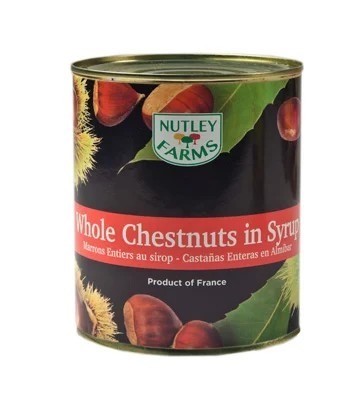
Candied Chestnut Pieces in Syrup come from chestnuts that break during candying. Same flavor, same texture, lower price. Fold them into ice cream, scatter them over a plated dessert, or layer them into a Bûche de Noël.
Expert Tip: Use whole chestnuts where guests can see them and pieces where they can't. A can of pieces costs about half as much as a can of whole chestnuts at the same weight, so splitting the two by application keeps food cost in check without changing the flavor.
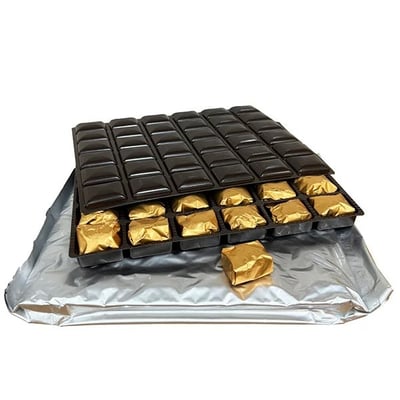
For retail counters and holiday gifting, Individually Wrapped Candied Chestnuts arrive ready to merchandise, 36 pieces to a tray.
Planning your holiday dessert menu? Ask your Paris Gourmet distributor about stocking our Nutley Farms chestnut line before peak season.
3. How Do You Use Chestnut Paste in a Bûche de Noël?
Chestnut paste makes one of the most traditional Bûche de Noël fillings in France, and it's simple to work into a buttercream or mousse. Sweetened Chestnut Paste 60% is the right fit here. It's dense enough to carry real chestnut flavor but folds easily into a fat-based cream.
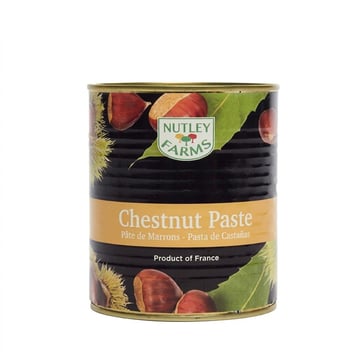
A good starting point is about one part chestnut paste to two parts Swiss or French buttercream by weight, adjusted to taste. Beat the paste first to loosen it so it doesn't streak the cream. For a lighter filling, fold the paste into a mousseline or a chantilly stabilized with gelatin.
Chestnut pairs well with flavors that are already on most holiday menus:
- Dark chocolate: A chocolate génoise roulade with chestnut cream is the classic French combination.
- Rum or cognac: A light brush on the sponge brings out the vanilla in the paste.
- Cassis or pear: A fruit insert cuts through the richness.
Add candied chestnut pieces to the filling for texture, and finish the log with a whole candied chestnut or two.
4. How Do You Use Chestnut Spread in Crepes and Filled Pastries?
Chestnut spread is smooth and sweet, and it spreads easily straight from the can. Nutley Farms Sweetened Chestnut Spread is 50% chestnut and 50% sugar and vanilla, with a texture closer to a pastry cream.
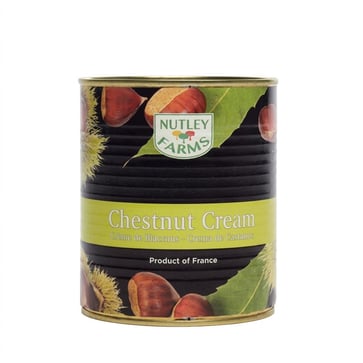
That texture makes the spread a fantastic choice for breakfast pastry and brunch, where speed matters:
- Crepes: Spread it cold across a warm crepe, then fold and finish with powdered sugar or a few candied chestnut pieces.
- Viennoiserie: Pipe it into croissants, pains au chocolat, or brioche after baking for a holiday filled pastry.
- Brunch: Swirl it through crème fraîche or mascarpone as a topping for pancakes or French toast.
If you're building out a holiday viennoiserie program, our guide to laminated pastries covers the dough side: Why Laminated Pastries Continue to Dominate Bakery and Café Menus →
5. How Do You Use Unsweetened Chestnut Puree in Savory Dishes?
Unsweetened chestnut puree brings chestnut's earthy, slightly sweet flavor to savory holiday dishes without any added sugar. Nutley Farms Unsweetened Chestnut Puree 85% contains just two ingredients, chestnuts and water, with no salt or sugar. That gives the kitchen full control over seasoning.
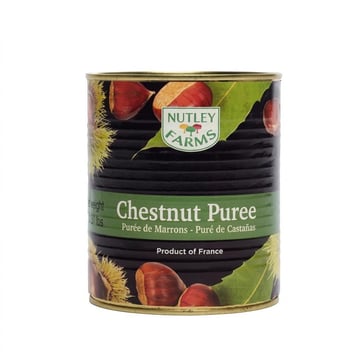
Three ways to put it on a holiday menu:
- Chestnut soup: Sweat shallots and celery root in butter, add stock and puree, then blend and finish with cream. A drizzle of brown butter or a spoon of crème fraîche dresses it up.
- Stuffing: Fold the puree into a bread or sausage stuffing for a richer, moister texture than whole roasted chestnuts can give.
- Game accompaniment: Season it like a pommes purée with butter and salt, and serve it alongside venison or duck.
Our Take: Without added sugar, this product moves easily between soup, stuffing, and a plated entrée in the same service.
Build Your Holiday Menu Around Chestnuts
These five chestnut dishes cover the whole holiday menu. Chestnut Supreme and Sweetened Paste handle Mont Blanc and Bûche de Noël. Whole candied chestnuts and pieces cover marrons glacés and garnish. The spread fills crepes and pastries, and the unsweetened puree takes chestnuts into soup, stuffing, and game.
Explore our full Nutley Farms chestnut collection or find a distributor near you to stock up for the season →