
- By Charlotte Brown
- June 23, 2026
From velvety soups to refined Mont Blanc — how to make chestnuts the star of your seasonal menu.
Few ingredients create as much anticipation on a menu as chestnuts. Diners associate them with colder weather, European traditions, and dishes that feel a little more special than everyday fare. Yet despite their appeal, chestnuts rarely become a year-round staple in professional kitchens. Fresh chestnuts are seasonal, labor-intensive to process, and difficult to source consistently at scale.
That's what makes ready-to-use chestnut products so valuable. With the right purées, pastes, creams, and candied chestnuts, chefs can bring the flavor, texture, and versatility of chestnuts into both savory and pastry applications without the prep burden.
Nutley Farms, part of the Paris Gourmet family, offers a complete portfolio of premium chestnut products designed specifically for professional kitchens. From refined soups and game dishes to classic European desserts, these ingredients make it easier to feature chestnuts whenever inspiration strikes.
Here are five chef-worthy chestnut recipes that showcase just how versatile chestnuts can be.
Why Chestnuts Keep Earning Their Place on Great Menus
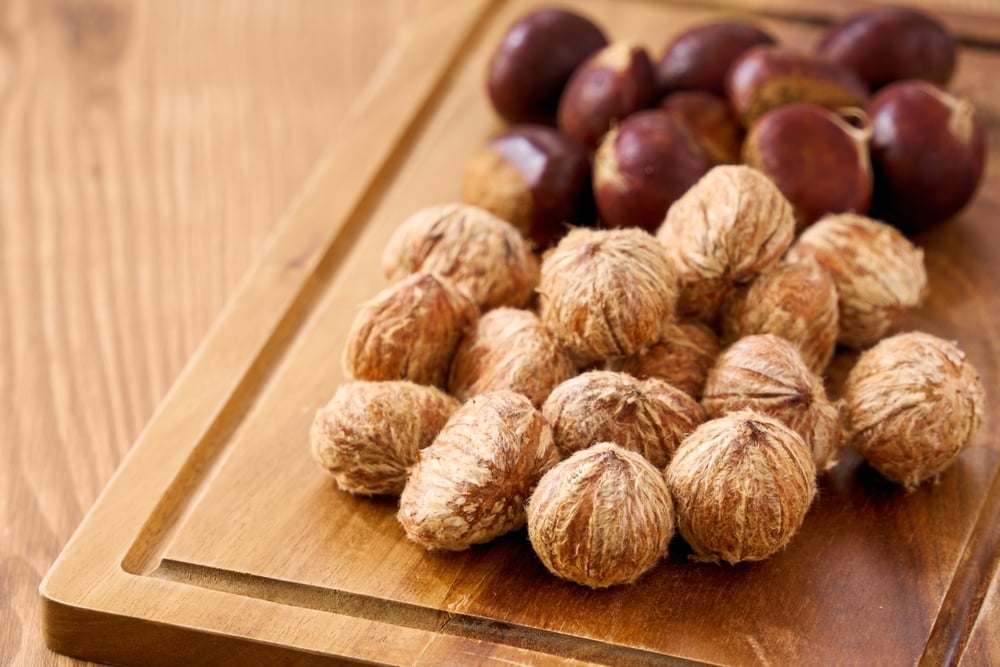
Chestnuts occupy a unique position in the culinary world — they're the only nut that behaves more like a starchy vegetable than a fat-rich seed.
Low in fat and naturally high in complex carbohydrates, they have a dense, creamy texture when cooked and a flavor that sits somewhere between sweet corn, vanilla, and toasted hazelnut. That combination makes them exceptionally versatile across both savory and pastry applications.
In savory cooking, chestnut purée adds body and subtle sweetness to soups, enriches stuffings for poultry and game, and serves as a sophisticated alternative to root-vegetable mashes. Its affinity for earthy, robust flavors (venison, duck, wild mushrooms, truffles, etc.) makes it a natural fit for fall and winter menus.
In pastry and confectionery, chestnuts come into their own. Chestnut paste and chestnut cream are foundational ingredients in classical French and Italian desserts, from Mont Blanc to bûche de Noël to chestnut ice cream. The nut's natural sweetness means less added sugar is needed, and the flavor holds up beautifully through baking, freezing, and whipping.
The sourcing challenge is real, though. Fresh chestnuts are highly seasonal, typically available only from October through December, and have a short shelf life. Quality varies significantly by region and harvest year, and processing them in-house is time-consuming and inconsistent at scale. For professional kitchens that want to feature chestnuts year-round, a reliable processed product isn't a shortcut. It's a necessity.
Key Takeaways:
- Chestnuts work in both savory and sweet recipes.
- Chestnut purée is ideal for soups, sauces, and game dishes.
- Chestnut paste and chestnut spread are essential for pastry and dessert applications.
- Candied chestnuts provide premium garnish and confectionery options.
- Ready-to-use chestnut products help chefs save time while maintaining consistency.
5 Recipes With Chestnuts You Need on Your Menu
Looking for new ways to feature chestnuts on your menu? These five chestnut recipes showcase how chefs can use chestnut purée, chestnut paste, sweetened chestnut spread, and candied chestnuts to create memorable appetizers, entrées, and desserts with less prep time and greater consistency.
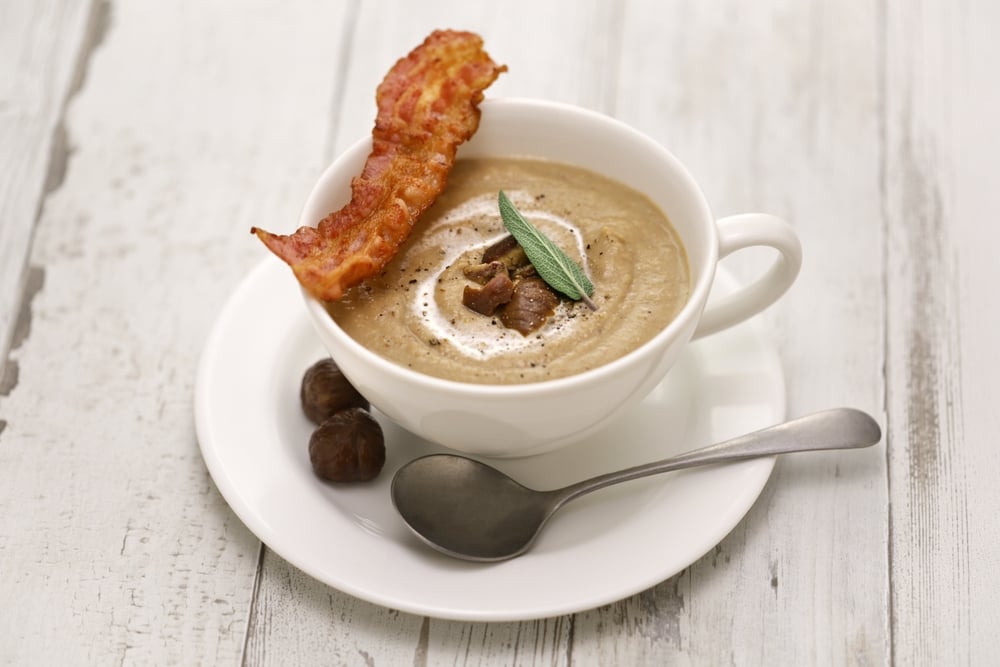
1. Chestnut Velouté with Crème Fraîche and Chives
A luxurious opener for any fall or winter menu. The key is starting with a clean, high-quality chestnut purée — no grittiness, no bitterness. Just warm, nutty sweetness.
How to make it:
- Sweat shallots and leeks in butter until translucent
- Add chicken or vegetable stock and bring to a gentle simmer
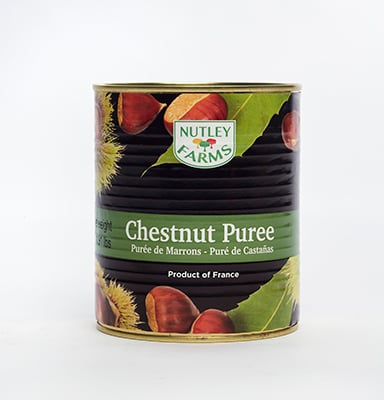
- Stir in Nutley Farms Unsweetened Chestnut Puree 85% and blend until smooth
- Finish with a splash of cream and season to taste
- Serve with a quenelle of crème fraîche, snipped chives, and a drizzle of hazelnut oil
Why it works: The unsweetened formula (85% fresh chestnuts, no salt or sugar added) gives you full control over seasoning and lets the chestnut flavor lead.
Nutley Farms Unsweetened Chestnut Puree 85% | 1.91 lb. metal can | 6 cans per case
2. Roasted Rack of Venison with Chestnut Purée and Red Wine Jus
Few pairings in classical cuisine are as satisfying as game and chestnuts. The earthiness of venison and the warm sweetness of chestnut purée are made for each other.
How to make it:
- Sear a trimmed rack of venison until deeply caramelized, then roast to temperature
- While it rests, warm Nutley Farms Unsweetened Chestnut Puree 85% with butter and cream
- Season with salt, white pepper, and a hint of nutmeg
- Pipe or spoon the purée onto warmed plates
- Lay the carved venison alongside and finish with a glossy red wine and juniper jus
Why it works: Because there's no added sugar or salt, the purée behaves like a true culinary base. It absorbs seasoning beautifully and complements savory profiles without competing with them.
3. Chestnut Cream Tart with Vanilla Chantilly
For the pastry kitchen, chestnut paste is the workhorse of chestnut confectionery — rich, deeply flavored, and the backbone of everything from tart fillings to ice cream bases.
How to make it:
- Blind-bake individual sweet pastry shells to a golden finish
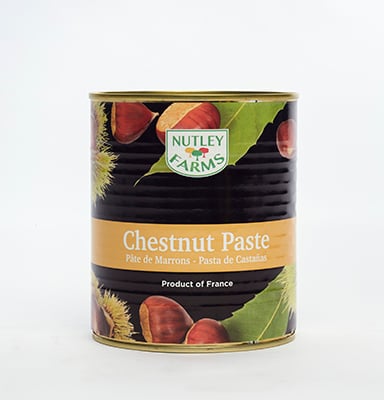
- Fold Nutley Farms Sweetened Chestnut Paste 60% with softened butter until smooth and pipeable
- Fill each shell generously, smoothing the surface flat
- Top with soft vanilla Chantilly cream just before service
- Finish with a light dusting of cocoa powder or crushed meringue for texture
Why it works: Slowly cooked from 60% fresh chestnuts with real vanilla beans, this paste holds its structure in a tart shell and delivers a depth that lighter chestnut creams can't match.
Nutley Farms Sweetened Chestnut Paste 60% | 2.2 lb. metal can | 6 cans per case
4. Classic Mont Blanc
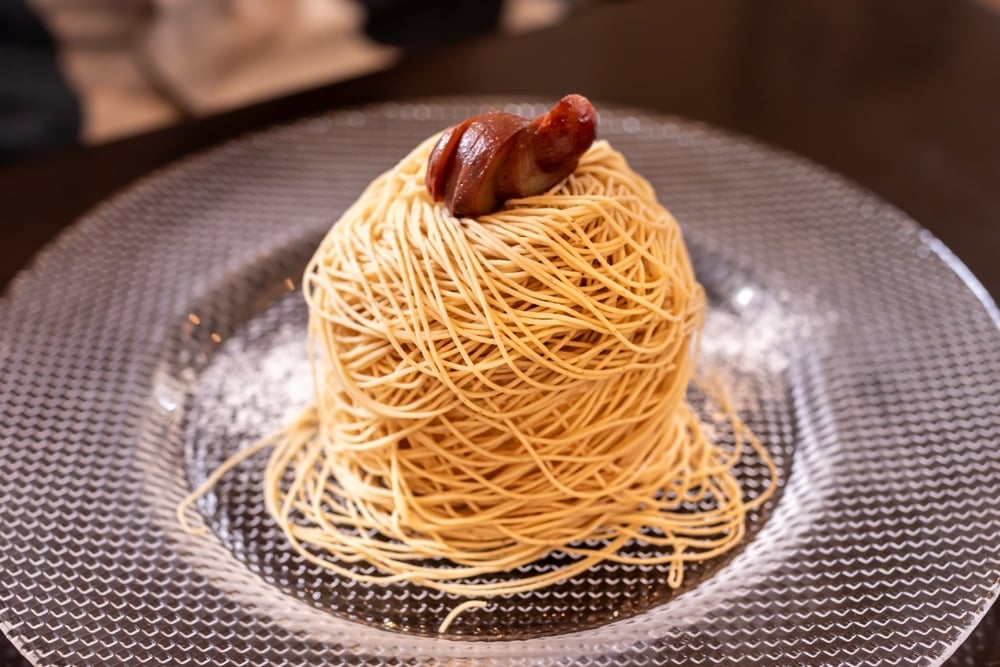
This iconic French-Italian dessert is one of the most theatrical ways to put chestnuts on the plate. The secret to classic Mont Blanc is a chestnut cream smooth enough to pipe through a fine vermicelli tip while holding its shape.
How to make it:
- Bake small individual meringue discs and cool completely
- Thin Nutley Farms Sweetened Chestnut Spread 50% with a touch of rum or dark spirit if desired
- Pass through a fine sieve and load into a piping bag with a vermicelli tip
- Add a base of crème Chantilly over the meringue
- Pipe the chestnut cream over the top in the classic nest formation, mounding it high
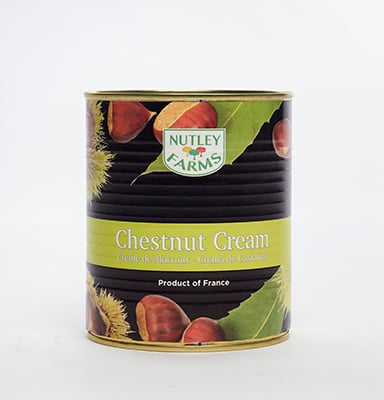
Why it works: The Sweetened Chestnut Spread's smooth, emulsified consistency flows through fine piping tips without clogging and sets beautifully on the plate without weeping or separating.
Nutley Farms Sweetened Chestnut Spread 50% | 2.2 lb. metal can | 6 cans per case
5. Candied Chestnut and Dark Chocolate Dessert
Whole candied chestnuts (marrons glacés) are among the most labor-intensive confections in classical French cuisine. The multi-day candying process is virtually impossible to replicate at scale in a commercial kitchen. Nutley Farms does it for you.
How to make it:
- Temper high-quality dark chocolate and pour into small tart molds or spheres
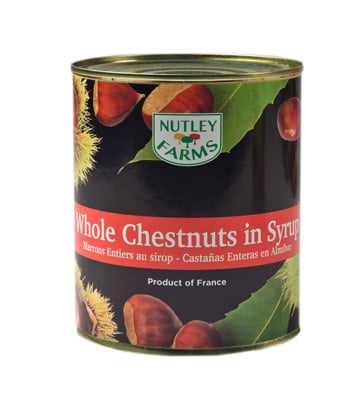
- Once set, fill with a ganache made from cream and syrup from the Nutley Farms Whole Candied Chestnuts in Syrup can
- Crown each piece with a whole candied chestnut
- Serve as part of a petit fours selection or a plated dessert
Why it works: Each chestnut is candied in heavy syrup with real vanilla beans — delivering the glossy, jewel-like finish that makes this ingredient so visually striking. Also works beautifully as a garnish for ice cream, cheese boards, or as a finishing touch on the Mont Blanc above.
Nutley Farms Whole Candied Chestnuts in Syrup | 2.31 lb. metal can | 6 cans per case
Why Chefs Trust Nutley Farms
What makes these recipes repeatable is the consistency of the ingredients behind them. Nutley Farms is built on strategic sourcing relationships with trusted growers and processors who adhere to strict quality standards. Every product is stored and handled to preserve freshness and flavor from the can to the kitchen.
The chestnut range covers every culinary need:
|
Product |
Best Uses |
|
Soups, sauces, game dishes |
|
|
Tart fillings, pastries, confectionery |
|
|
Mont Blanc, creams, fillings |
|
|
Garnishes, plated desserts, petit fours |
Chestnuts are seasonal by nature. With Nutley Farms, your menu doesn't have to be.
Frequently Asked Questions About Cooking With Chestnuts
What can chestnuts be used for in cooking?
Chestnuts are used in both savory and sweet applications, including soups, purées, stuffings, sauces, pastries, tarts, Mont Blanc desserts, and chocolate confections.
What is chestnut purée used for?
Chestnut purée is commonly used in soups, savory side dishes, stuffings, sauces, and as a base for game and poultry accompaniments.
What is the difference between chestnut purée and chestnut paste?
Chestnut purée is typically unsweetened and used in savory recipes, while chestnut paste contains added sugar and is designed for pastry fillings, desserts, and confectionery applications.
Do chefs use canned chestnuts?
Yes. Many professional kitchens use premium canned chestnut products because they offer consistent flavor and texture, year-round availability, and eliminate labor-intensive preparation.
Bring Premium Chestnut Ingredients to Your Menu
From savory chestnut purées for seasonal entrées to sweet chestnut pastes and candied chestnuts for elegant desserts, Nutley Farms offers professional chefs a complete portfolio of premium chestnut products.
Explore the complete Nutley Farms chestnut collection and discover ingredients designed for professional kitchens.